
At A Glance
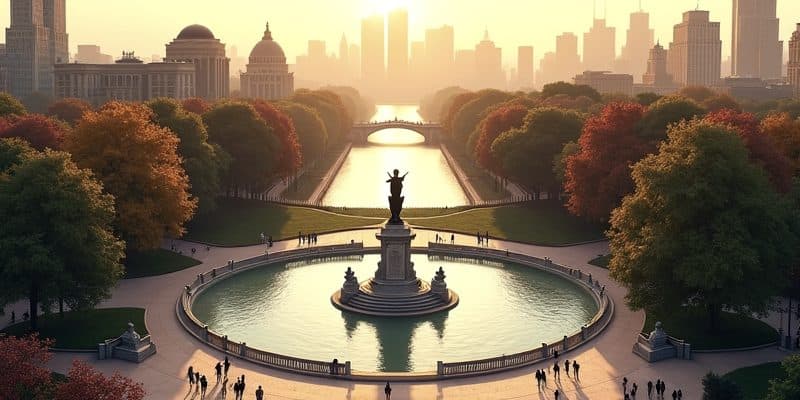
Non-residential. Central Park is NYC's iconic 843-acre urban park spanning 51 blocks of Manhattan. Playgrounds, ball fields, lakes, and cultural venues serve millions of visitors annually.
Did you know?
Central Park was built on a landscape that was home to Seneca Village, a thriving community of mostly African-American property owners who were displaced by eminent domain in 1857.
Want personalized insights for your family?
Get an agentic neighborhood analysis — including safety and cost of living — tailored to your priorities, family size, budget, and commute.
Analyze for My FamilyPlaces of Interest
Neighborhood Stats
Avg Rent
Avg Sale Price
Who’s your neighbor?
What families should know
Parks & Playgrounds
20Central Park is a wonder for families — the park packs in twenty playgrounds across its 843 acres, from the Ancient Playground near the Met to the Wild West Playground on the west side. That's a deep bench of options even when the immediate neighborhood skews adult. Whether you need a splash of adventure or a quiet spot, the playgrounds run the full stretch of the park.
Transportation
62You've got the B and C trains carving up the west side at 96 St, 81 St-Museum of Natural History, and 72 St, while the N, R, and W kick in around 5 Av/59 St on the east. That's solid coverage for a park-edge address, and the bus network along 5 Av and Central Park North keeps the options flowing. Commuting anywhere in Manhattan is straightforward from here.
Restaurants
6Dining in Central Park is a thin but iconic roster — the kind of place where you bring visiting relatives rather than grab a Tuesday dinner. Tavern on the Green and the Boathouse anchor the park as old-school, tourist-facing destinations with views that sell themselves, while a handful of casual shacks and the Members Dining Room at the Met cater to more specific crowds. There is no deep local restaurant scene here; this is park food, meant to be enjoyed in context rather than competing with a real neighborhood strip.
Groceries
The Upper West Side delivers a deep bench of grocery options, from Everyday Value-style chains like the Key Food on Broadway to a pair of Trader Joe's locations and a Whole Foods on Columbus for the weekly shop. D'Agostino and Gristedes have multiple outposts across the neighborhood, while specialty grocers like Citarella and Broadway Farm cover the higher-end end of things. Fairway anchors the east side near 86th, and the Kosher Marketplace on Broadway fills a specific niche. Nearly everything's walkable — you won't need a car unless you're stocking up for a crowd.
Coffee Shops
8Coffee in Central Park means grabbing a cup between sights rather than settling into a laptop session — the options are spread across the park's museum mile and major gathering spots, not clustered on a single strip. Le Pain Quotidien has two outposts near the eastern edge, while most other spots are cafe counters at the museums, ballfields or Sheep Meadow. Don't expect a deep bench of third-wave roasters here; it's grab-and-go fuel more than an espresso scene.
Things to Do
37The mix here skews heavily enrichment — museums and cultural institutions line the park's edges, with multiple wings and rotating exhibitions that could keep curious minds occupied for years. Sports options are thinner but real: basketball and soccer courts dot the North Meadow, and there are a couple of public pools for summer relief. A small children's zoo and a few dedicated kids spaces add a flicker of family-friendly texture, though you're not going to find the kind of activity density you'd see in more family-saturated neighborhoods. What’s here is quality, but it’s spread thin across the park's vast footprint.
Daycare & informal care
There's a deep bench of daycare options here — 22 in total, with several well-established chains like Bright Horizons, KinderCare, and The Goddard School maintaining multiple locations throughout the area. What you'll notice is that these are almost entirely private daycares; universal Pre-K is essentially absent from this stretch, which is a notable gap if you're counting on free Pre-K slots. Morning drop-off can get congested on the avenues, but having options spread across the Upper West Side and into the 90s means you can usually find something within reasonable walking distance if you plan around the peak hours.
Healthcare
Healthcare in Central Park comes with a notable gap — there are no hospitals within the neighborhood boundaries themselves, so anything serious means heading to neighboring areas. What you do get is a deep bench of pediatricians and dentists, particularly along the main avenues, with over a dozen pediatric practices and a similarly strong roster of dental options, including several kid-focused practices. Urgent care is reasonably covered with a handful of CityMD, MEDRITE, and Mount Sinai locations scattered across the perimeter. The tradeoff is clear: solid everyday care is nearby, but ER-level facilities require a short trip out.
Neighborhood map
Neighborhood map
Frequently Asked Questions
- Is Central Park a good neighborhood for families?
- Central Park scores 28/100 for families on Motley — toward the lower end citywide. The Family Fit score blends safety, schools, parks, cost of living, and community.
- Is Central Park safe?
- Central Park scores 74/100 on safety — ahead of most NYC neighborhoods. We build the score from NYPD complaint data, normalized by population.
- How are the schools in Central Park?
- Central Park scores 3/100 for schools on Motley — toward the lower end citywide. Most families here zone into adjacent neighborhoods for school.
- Is Central Park affordable?
- Central Park scores 34/100 for affordability on Motley — among the pricier parts of the city.
- Which borough is Central Park in?
- Central Park is a neighborhood in Manhattan, New York City.
Want personalized insights for your family?
Sign in to get an agentic neighborhood analysis — including safety and cost of living — tailored to your priorities, family size, budget, and commute.
