What a Listing Site's School Score Can't Tell You About a NYC Block
The school score next to an apartment listing feels like the school question, answered. In NYC it's measuring something different than you think — here's what a national rating structurally can't see on a city block, and how to actually read one.

You’re apartment-hunting, and right next to the rent is a school score — a single number, maybe a star, attached to the listing. It feels like the school question, answered: this place is a 7, that one is a 4, decided.On a listing site — Zillow, StreetEasy, the national school-rating sites — that badge is doing real work in most of the country. In New York City, it’s the beginningof the question, and it’s quietly measuring something different than you think.
This isn’t a knock on those tools. It’s a structural mismatch, and it’s worth understanding before you let a number on a listing rule a neighborhood in or out.
What that score actually is
A listing’s school score is, almost always, a national rating — one built to work in every market in the country — attached to the nearest school or the surrounding district, leaning heavily on test scores. In a town with one school system and straightforward geographic enrollment, that’s a useful shorthand: the house comes with the school down the road, and the rating describes that school.
NYC is not that town. Here, the link between “this address” and “this school” runs through systems a national badge can’t see.
Four things it can’t see on a NYC block
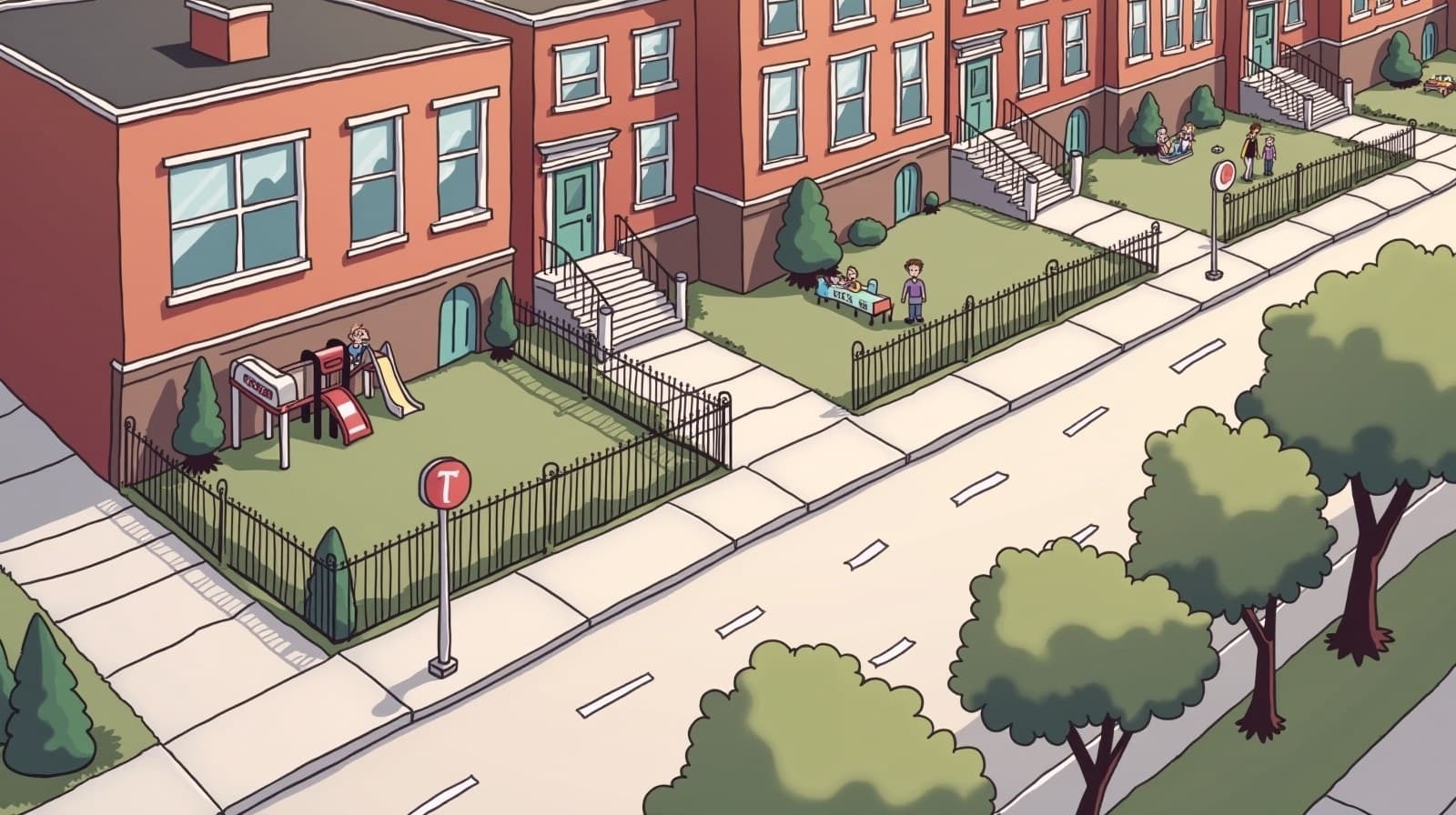
- Your zoned school is block-level, not the nearest pin. Zone lines in NYC run down the middle of streets — the apartment across the avenue can be a different zone. A score attached to “the nearest school” can simply be pointed at the wrong one. The fix is a five-minute habit: check the zoned school before you sign, and read how zoning actually works on the zoned admissions method.
- “The schools near this address” isn’t “the schools your kid can get into.” Many NYC schools are screened (ranked by grades) or admit by lottery — so proximity isn’t access. A great school one block over can be one your child has to compete or get lucky to enter. We unpack the most important case in what “screened” actually means.
- One number flattens a whole district of choices.A NYC neighborhood doesn’t feed into one rated school — it sits inside a community school districtwith zoned, choice, and specialized options. Judging the block by a single nearby rating throws away most of what’s actually available to you.
- Charters run a parallel system the badge ignores. Charter schools are public and free but admit through their own lottery, outside the regular process — an entire layer of options a listing score usually doesn’t touch. See our charter school lottery guide.
How to actually read a NYC block
Replace the one-number glance with three quick moves:
- Run the exact address, not the neighborhood. Drop the specific address into our school and neighborhood search to see the zoned school for that block, the district it sits in, and the neighborhood around it — the things the address actually determines.
- Open the district, not just the pin. Browse the best neighborhoods for schools and the full neighborhood directory so a place is a real set of options, not a badge.
- Compare two blocks head-to-head. Take your top two and put them side by side— schools, safety, transit, and cost on one screen — instead of trusting two scores that were never measuring the same thing.
Why it’s structural, not a flaw
A national listing site is built to cover every market in the country, and that breadth is exactly why it can’t localize NYC’s zoning, screens, and lotteries — no tool can profitably decode one city’s machinery while serving ten thousand towns. We made the opposite trade: we cover only New York, so we can read the block instead of the average. Use the listing site for what it’s great at — finding the apartment. Use a city-only tool for the part that decides your kid’s school.
Before you rule a neighborhood in or out
Don’t let a number on a listing be the whole story. For the full decision — school and neighborhood together — start with how to choose a NYC neighborhood when you have kids, and when you’re weighing two areas, compare them on the things parents actually weigh. Then run your real block and let the data start the conversation.